Condo Parking: Deeded Space vs. License
A parking spot in a new condo can be real property you own, a revocable license, or just a monthly rental from a garage operator. The offering plan tells you which. Here's how to read it.
You found the apartment, and the listing says "parking available." Before you budget for it, find out what you'd actually be buying. In a NYC condo, a parking spot can be a piece of real estate you own, a license the sponsor can take back, or a monthly rental from a garage company. They look the same on a tour. They're very different at resale, at the bank and at tax time.
The answer is written in the building's offering plan, the disclosure document every new condo files with the New York Attorney General. We read the price lists in 1,572 NYC condo offering plans, and 309 of them sell parking spaces as their own line items. Here's what we learned, in the plans' own words.
Three Ways a Condo Sells Parking
- Deeded parking unit. The space is its own condo unit, with its own deed, tax bill and common charges. You own it outright.
- License. You pay for the right to use a space, but the space stays part of the building's shared property. A license can usually be revoked, and it isn't real estate.
- Rental or assigned space. A garage operator rents spaces month to month, or the space is tied to your apartment as a "limited common element," a shared part of the building that only one unit gets to use.
Parking is mostly an outer-borough story. Of the 8,025 NYC condo plans in our records, 1,749 (22%) list parking spaces, and 89% of those are in Brooklyn or Queens. Only 159 are in Manhattan.
Deeded Parking Units: You Own It
A deeded space is the strongest thing you can buy. It gets its own tax lot from the city, so it has its own deed, its own property tax bill and its own monthly common charges (your share of the building's operating costs). You can usually finance it, insure the title and sell it later.
“There will be nine (9) open parking spaces at the cellar level, which shall be separate units assigned their own tax lots (the “Parking Units”). These parking spaces will be offered for sale to Purchasers of Residential Units and existing owner-occupants of Residential Units only”
Bath Beach Residence Condominium, Brooklyn, offering plan CD240161, page 31
The catch: who you can sell it to. Many plans only let residential owners in the building own a parking unit. That protects the building from outsiders, but it also means your buyer pool is your neighbors.
“Cabana Units and Parking Units may only be owned by a Unit Owner who also owns a Residential Unit. Cabana Units and Parking Units may only be leased to and used by a tenant of a Residential Unit.”
5th Street Lofts Condominium, Queens, offering plan CD060400, page 10
So if you sell your apartment and keep the space, you may not be allowed to. Ask whether you can sell the space separately, and to whom.
Parking Licenses: You Have Permission
With a license, the space stays part of the building's common elements, the areas all owners share. You're buying the right to park there, not the space itself. The sponsor (the developer selling the units) often keeps the license fee.
“The Property will also contain 45 outdoor parking spaces, which will be a General Common Element of the Condominium (43 of which [including one Disabled Parking Space] will be available for licensing by Tower Sponsor to Purchasers of Tower Units). EACH SUCH PARKING SPACE LICENSE SHALL BE REVOCABLE.”
1 Brooklyn Bay Condominiums, Brooklyn, offering plan CD160373, page 36
A license usually can't be mortgaged or title-insured. Plan to pay cash for it, and know that your lender won't count it as part of the home.
“Purchasers are advised that the Parking License are not mortgageable or insurable for title insurance purposes. Sponsor believes that the Parking Licenses are not subject to the imposition of transfer taxes detailed in this Section.”
Morgan Condominium, Manhattan, offering plan CD250420, page 182
Some licenses carry a monthly fee on top. At Calvert House in Brooklyn, you pay the developer for the license plus a monthly fee to the condo. Licenses are also the usual setup in the Manhattan buildings that offer parking, and they can be expensive there.
Garage Rentals and Assigned Spaces
Attended garages. When a valet parks the cars, the spaces can't be split into separate lots, so there's nothing to buy. The sponsor keeps or leases the whole garage, and you rent.
“Purchasers will not have the ability to purchase deeded parking spaces because, as attendant parking spaces, they will not be apportioned into individual tax lots. However, the parking spaces will be rented to Unit Owner’s on first come, first served basis.”
Arch 31 Condominium, Queens, offering plan CD190365, page 62
In a building with a commercial garage, the operator sets the price, and residents may get first call but no guarantee.
“The Garage Operator has the exclusive right to establish fees for rental of parking spaces and Sponsor makes no representation as to the availability or cost of parking spaces at any point in time. The lease with the Garage Operator requires that preference be given to residents of the building for available monthly parking spaces.”
200 E 62 Condominium, Manhattan, offering plan CD140109, page 103
Sometimes parking isn't part of the sale at all. The offering plan for Carnegie Park on the Upper East Side puts it plainly: "Parking is not a component of the purchase." The garage owner sets the rates, and nothing in the plan caps them.
Limited common elements. In some small buildings, a space simply comes with a particular apartment, the way a private terrace might. It isn't a separate unit, and it goes with the apartment when you sell.
“Per ZR 25-412, parking spaces shall be used by residents or their guests only. The parking spaces shall be limited common elements assigned to individual Condominium units within the building.”
96 King Street Condominium, Brooklyn, offering plan CD200028, page 141
Robotic Garages and EV Charging
A growing number of new buildings, especially in Manhattan, use automated garages that park the car for you. 140 Jane Street and The Henry on the Upper West Side both use automated systems. Tip: these often limit car size, so check the specs if you drive an SUV. EV charging comes up in plenty of plans, but that doesn't mean every space has a charger, so ask.
What a Parking Space Costs
Every offering plan has a Schedule A, the sponsor's price list for each unit. In the 204 buildings accepted since 2015 that price parking spaces there, the typical space was offered at $60,000, with common charges of about $43 a month on top. Manhattan is a different market, though few new buildings there sell spaces at all: in the handful we found (6), the typical asking price was $247,500.
These are sponsor asking prices from the plan, not closing prices. Each building page on The Condo Book Project shows its own Schedule A.
How to Spot a Deeded Space in ACRIS
ACRIS is the city's free online database of property records. Once a condo is divided into tax lots, a deeded parking space shows up as its own unit, with its own lot number and, when it sells, its own deed. Look up the building's address and scan the unit list: spaces are often labeled P1, PS1 or similar. A license or garage rental won't appear there at all, because nothing is deeded.
This is also a quick way to see what spaces have actually sold for in a building, since each parking deed records its price.
What to Ask Before You Sign
- Is the space a deeded unit, a license, a rental or a limited common element? Find the answer in the offering plan, not the listing.
- Does it have its own tax lot? If yes, ask for its estimated property taxes and monthly common charges in Schedule A.
- Who can own or rent it? Check for rules limiting owners to residential unit owners in the building.
- Can you sell it separately from the apartment? And can you keep it if you sell the apartment?
- Can the license be revoked? If it's a license, ask your attorney what happens if the sponsor or board ends it.
- Can it be financed? Ask your lender before you count on a mortgage covering the space.
- Who sets the price later? For garage rentals, ask whether the operator can raise rates and whether residents get priority.
- Is it attended or self-park, indoor or outdoor, and is there EV charging? The plan's description of the property usually says.
- Is it in ACRIS? For a resale, confirm the seller actually holds a deed to the space.
Every building page on The Condo Book Project links to the full offering plan, so you and your attorney can read the parking section yourselves.
Common Questions
What is a deeded parking space in a condo?
A parking space that is its own condo unit, with its own deed, tax lot, property taxes and common charges. You own it like any other real estate.
Is a parking license the same as owning a space?
No. A license gives you the right to use a space that stays part of the building's common elements. It's often revocable, and plans warn that licenses usually can't be mortgaged or title-insured.
Can I buy a condo parking space if I don't live in the building?
Often not. Many offering plans say parking units may only be owned by residential unit owners in the building. Check the plan for your building.
How much does a condo parking space cost in NYC?
In plans accepted since 2015, the typical sponsor price for a space was $60,000 in Brooklyn and $60,000 in Queens, plus monthly common charges. The few Manhattan buildings that sell spaces priced them far higher.
How do I check whether a parking space is deeded?
Look up the building in ACRIS. A deeded space has its own unit and lot number and its own deed. If the space isn't there, it's a license, a rental or part of an apartment.
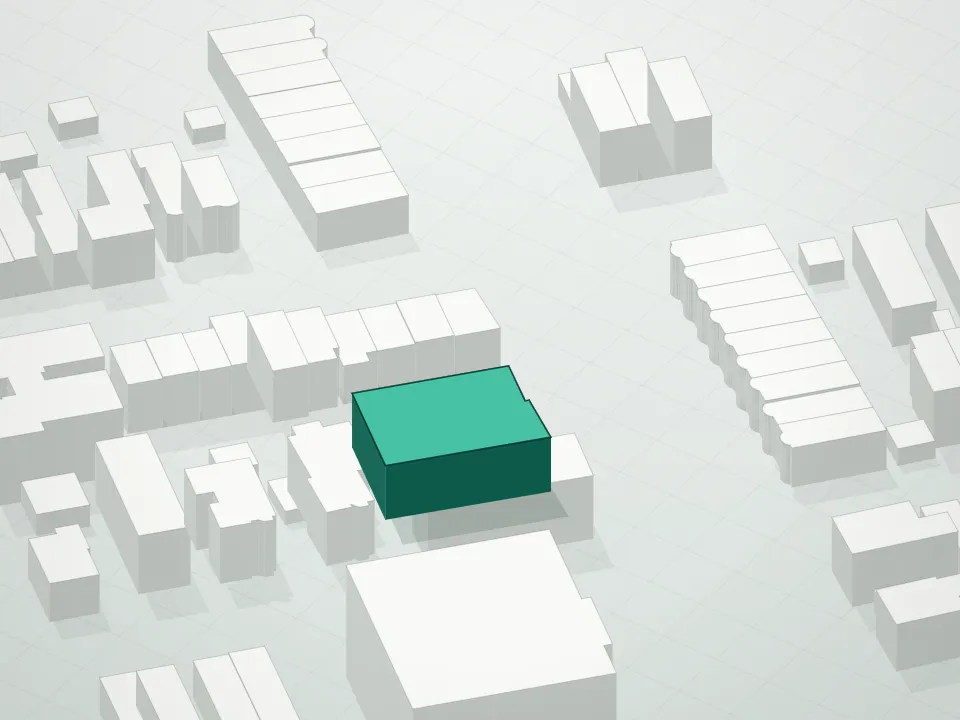
We read the Schedule A price lists in 1,572 NYC condo offering plans and counted the 309 that list parking spaces as their own units. Prices are the median per building of sponsor asking prices, for plans accepted by the Attorney General in 2015 or later, leaving out whole garages sold as one unit. The share of plans with parking comes from each plan's parking count on its AG record, which includes licensed spaces. Quotes are verbatim from the offering plans, checked against the plan text. The picture is a 3D massing drawing, not a photo. Sources: NY Attorney General condo offering plans and ACRIS. Updated as of Oct 13, 2026.