What You Get in a Small NYC Condo Building
A small building can feel like a private house or like a mini tower. We read the offering plans of new NYC condos to see which amenities boutique buildings really include, which ones only show up in bigger buildings, and what a doorman does to your monthly charges.
Shopping for a condo in a small building? You're trading something for that quiet lobby and short elevator ride. The question is what. Listings are vague ("curated amenities"), so we went to the source: we read 1,365 offering plans for new NYC condo buildings accepted since 2015. The offering plan is the legal document a developer files with the New York Attorney General before selling, and it has to describe what the building actually includes.
The short version: once a building passes about ten homes, a bike room is nearly standard. A gym, a package room and a shared roof deck are common but far from guaranteed. A doorman, a lounge and a pool mostly belong to bigger buildings.
What Counts as Boutique
Here, a boutique condo has 30 homes or fewer. That covers 76% of the new buildings we read. Many of those are very small, so we split them in two:
- Tiny: 10 homes or fewer (751 buildings).
- Boutique: 11 to 30 homes (291 buildings).
- Larger: more than 30 homes (323 buildings).
The Boutique Amenity Formula
Look at buildings with 11 to 30 homes and a clear pattern shows up:
- Bike room: 87%. The one amenity you can almost count on.
- Parking spaces for sale: 51%, about the same as in larger buildings (50%).
- Gym or fitness room: 38%. In the plans we quote below, it sits in the cellar.
- Video intercom or virtual doorman: 38%. A camera at the door that rings your phone or apartment, sometimes backed by a remote attendant.
- Package room: 30%. Storage lockers: 26%. Shared roof deck: 24%.
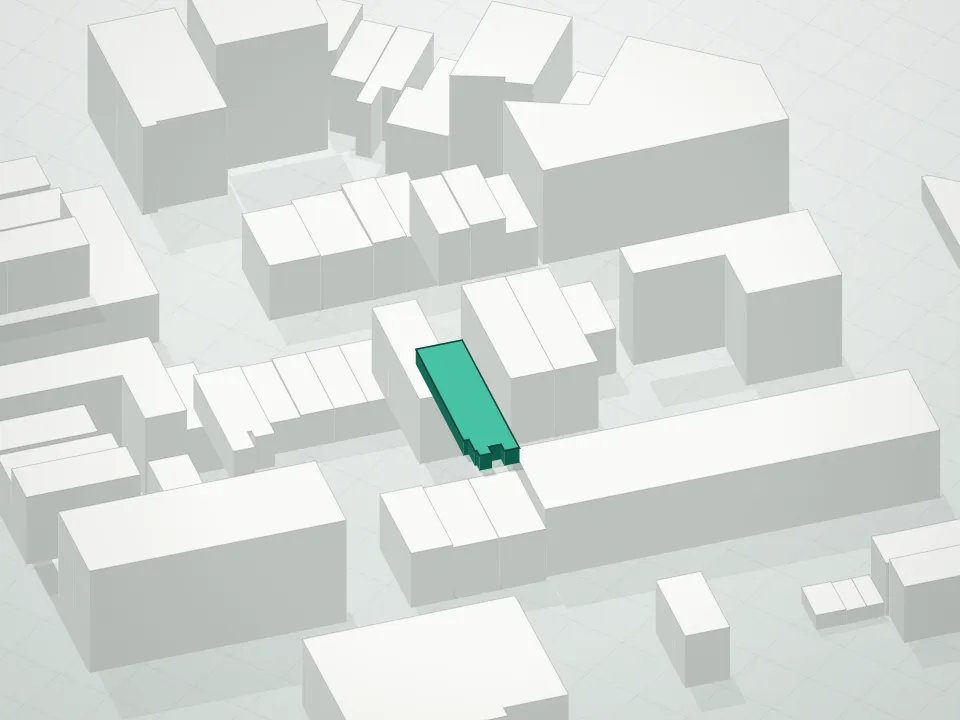
In tiny buildings of 10 homes or fewer, almost everything drops off: only 15% describe a bike room and 7% a gym. Think terrace, not gym: small buildings trade shared amenities for private space, so look for a home with its own terrace, balcony or yard, and check that it's in the plan. When a small building does have a shared roof deck, it's usually a simple one, like the common roof terrace at 1255 Decatur Street in Bushwick. More in our guide to private outdoor space.
Why the bike room? City zoning requires bicycle parking in many new residential buildings, which is why it jumps from rare to nearly universal once a building passes about ten homes. In a smaller building, expect a modest room with racks, not a bike lounge.
| Amenity | 10 homes or fewer | 11 to 30 homes | More than 30 homes |
|---|---|---|---|
| Bike room | 15% | 87% | 94% |
| Video intercom or virtual doorman | 25% | 38% | 35% |
| Gym or fitness room | 7% | 38% | 76% |
| Shared roof deck | 9% | 24% | 34% |
| Package room or lockers | 9% | 30% | 65% |
| Storage lockers or units | 9% | 26% | 55% |
| Parking spaces for sale | 9% | 51% | 50% |
| Residents' lounge | 2% | 15% | 60% |
| Doorman or concierge in the budget | 3% | 23% | 61% |
| Swimming pool | 0% | 4% | 27% |
Share of buildings whose offering plan describes each amenity. 751, 291 and 323 new-construction condo plans accepted since 2015. The doorman row reads the first-year budget instead, for plans with one on file.
In Their Own Words
Here's how a few small buildings describe their amenities in the plan. Notice how specific the language is: where the gym is, what floor the roof deck is on. That's the level of detail you can hold a developer to.

“In addition, the Premises will include (a) a fitness center and bicycle storage, both located in the cellar level and (b) a common rooftop terrace on a portion of the main roof.”

“The storage, gym, bike room and dog spa are located in the cellar.”

“There will also be various amenities for the benefit of the Residential Unit Owners, including a lounge room/bar, fitness center, spa/sauna, plunge pool, a pet spa and various utility and service areas located throughout the Building.”
“Video Intercom System : The Building will be equipped with a video intercom system.”
What Stays in the Big Buildings
Some amenities need enough owners to share the cost. Compare buildings of 11 to 30 homes with those above 30:
- Residents' lounge: 15% vs. 60%.
- Doorman or concierge in the first-year budget: 23% vs. 61%.
- Gym: 38% vs. 76%.
- Swimming pool: 4% vs. 27%.
Developers of small buildings still compete on amenities. Minuet in Midtown East, with fifteen homes, has an unattended gym and a yoga room, and d'Orsay on West 14th Street adds a steam room, sauna and plunge pool. In bigger buildings, amenities move from the cellar to a dedicated floor or the top of the tower, like the fitness room high up in Eastlight in Murray Hill. Pools, saunas and screening rooms mostly show up only in the largest buildings, and even then, read the rules: Rowan II in Astoria limits its pool to a few hours a day.
Good to know: a gym in the building isn't always yours. At Front & York in DUMBO, the fitness club is a separate business leased to an outside operator, not a condo amenity.
The takeaway: if a pool or a staffed lobby is a must-have, a boutique building is rarely the place to find it. If you'd rather not pay for them, it may be exactly the place. Amenities are shared by all owners, so their staff and upkeep are built into everyone's common charges whether you use them or not. More in why condo costs differ.
The Doorman Question and Your Monthly Charges
Staff is where amenities hit your wallet. Every offering plan includes Schedule B, the developer's projected budget for the building's first year, which sets your common charges (the monthly fee you pay toward running the building). We looked at the staffing lines in 339 boutique and 40 larger new buildings accepted since 2021.
- Most boutique buildings budget little or no staff. Only 43% have any staffing line, against 93% of larger buildings.
- When they do, it's modest. The typical boutique budget with a staffing line spends about $80 a month per home on it (larger buildings: $190).
- A doorman changes the math. Just 4% of these boutique budgets include a doorman or concierge (15 buildings). In those 15, staff runs about $1,720 a month per home. A front desk has to be covered every shift, and in a small building only a few owners split that cost.
Figures are medians, rounded, and per home. Your own share depends on your home's size. See operating expenses and common charges to compare buildings.
What to Ask or Check
Take this list to a showing, or to your attorney when you review the offering plan:
- Is each amenity in the plan? Search the plan's description of the property for the gym, roof deck or bike room you were shown. If it's only in the brochure, it isn't promised.
- Is the roof deck shared or private? Many small buildings give the roof to the penthouse as a "limited common element", meaning a common area only one home may use.
- Are storage and parking included or sold separately? Lockers and spaces are often extra purchases or licenses with their own monthly charge.
- Who answers the door? Check Schedule B for a doorman, a virtual doorman service or no staff at all, and how packages get handled.
- What does the budget assume? If the building has a gym or a staffed lobby, Schedule B should have lines for it. A low budget with a long amenity list is a red flag.
Common Questions
What is a boutique condo in NYC?
There's no official definition. Here it means a building with 30 homes or fewer, which describes most new NYC condo buildings: 76% of the plans we read.
Do small condo buildings have gyms?
Sometimes. 38% of buildings with 11 to 30 homes describe a gym or fitness room, against 76% of larger buildings. In buildings of 10 homes or fewer it's 7%.
Do boutique condos have doormen?
Rarely. Only 23% of buildings with 11 to 30 homes budget for a doorman or concierge. Many use a video intercom or virtual doorman instead.
Are common charges lower in a boutique building?
Staff costs usually are, because most small buildings budget little or none. A boutique building with a doorman is the exception: its staff cost per home can run well above a large building's.
We read the offering plans of 1,365 new-construction condo buildings in New York City accepted by the Attorney General since 2015, searching their text for each amenity and counting a building only when the plan states it has one (mentions like "no swimming pool" or a nearby public gym don't count). This is a keyword reading, so a few plans that describe an amenity in unusual words may be missed. Parking counts plans that offer parking spaces as units. The doorman figures and staffing costs come from the first-year budget (Schedule B), using the same records as our operating expenses page; staffing costs are medians per home per month among budgets with a staffing line. Building pictures are 3D massing drawings, not photos. Updated as of Oct 13, 2026.
Cite This Research
The Condo Book Project, “What You Get in a Small NYC Condo Building,” Condo Book Research, updated Oct 10, 2026, https://www.condobooknyc.com/research/boutique-condo-amenity-formula.html.
The figures are recomputed from the plan records each time the site is rebuilt, so cite the date you read them.