Small Building or Tower? What Brooklyn Buyers Pay for Each
Thinking about a small building on a brownstone block or a big one with staff downtown? We read Brooklyn's condo offering plans and the city's sales records to see what each choice really costs you, month to month and at closing.
Most new condos in Brooklyn aren't towers. They're small buildings on side streets, often a handful of homes over a few floors. The big buildings, with a lobby, staff and a long list of homes, are rarer and cluster in a few neighborhoods. Which one suits you comes down to more than taste. It changes what you pay each month, who you live with, and how the building is run.
We read 862 Brooklyn condo offering plans accepted since Oct 13, 2016. An offering plan is the disclosure document a developer (the "sponsor") files with the New York Attorney General before selling. We matched them to closings recorded with the city. Here's what we found.
How We Split Small and Large
A boutique building here has fewer than 20 homes. A large building has 50 or more. We count homes, not floors, since the plans don't reliably give height. Buildings in between are left out of the comparison so the contrast is clear.
Boutique buildings are 89% of the plans we read: 766 small buildings against 24 large ones. But the large ones hold 26% of all the homes.
Boutique vs. Large, Side by Side
| Boutiqueunder 20 homes | Large50+ homes | |
|---|---|---|
| Buildings | 766 | 24 |
| Asking price per sq ftSchedule A, median building | $1,213 | $1,350 |
| Typical home sizemedian home | 893 sq ft | 934 sq ft |
| Homes with 3+ bedrooms | 22% | 27% |
| Closing price per sq ftrecorded sales, median building | $1,163 | $1,217 |
| Time to close every homesold-out buildings | 10 months | 24 months |
| Common chargesper home, first-year budget | $474/mo · $0.49/sf | $947/mo · $0.90/sf |
| Real estate taxessponsor's first-year projection | $606/mo · $0.64/sf | $840/mo · $0.95/sf |
| Budget pays building staff | 35% | 85% |
| Most common neighborhoods | Bed-Stuy, Bushwick, Carroll Gardens/Gowanus | Downtown Brooklyn/DUMBO, Brooklyn Heights, Flatbush |
Each figure is the middle building in its group (the median), so one unusual building doesn't swing it. For building-by-building numbers, see the price per square foot, common charges and sales and sellout pages.
Price: Large Buildings Ask a Little More
The typical large building asked $1,350 per square foot, against $1,213 for a boutique building, about 11% more. Those asking prices come from Schedule A, the price list in every offering plan.
What buyers actually paid tells a similar story. Recorded closings came to a median $1,163 per square foot in boutique buildings and $1,217 in large ones. Against their Schedule A prices, boutique closings ran −3.3% and large-building closings −0.4%.
What it means for you: the gap may be as much about location as building size. Large buildings sit mostly in Downtown Brooklyn/DUMBO, Brooklyn Heights, Flatbush. Boutique buildings are spread across the borough, led by Bed-Stuy, Bushwick, Carroll Gardens/Gowanus. Compare a building with its neighbors, not with the borough.
Space: Similar Homes, Either Way
The homes themselves are close in size. The median home is 893 square feet in a boutique building and 934 in a large one. Three-bedroom-plus homes make up 22% of boutique homes and 27% in large buildings. Studios and one-bedrooms are about the same share in both, 37% and 38%.
So don't assume a small building means bigger homes. Read the floor plans, and check Schedule A for any private outdoor space. That's often a "limited common element": a terrace or yard that belongs to the building but only your home can use.
Monthly Costs: The Biggest Difference
Common charges in the typical large building were $947 a month per home, against $474 in a boutique building. Per square foot, that's $0.90 against $0.49. Common charges are your share of running the building: staff, insurance, utilities for shared spaces, repairs and reserves.
The reason shows up in the budgets. 85% of large buildings' first-year budgets pay building staff, such as a super, porters or a doorman, against 35% of boutique buildings. Many small buildings rely on a managing agent and outside contractors, with no one on site.
Real estate taxes follow the same pattern. The sponsors projected first-year taxes of $840 a month per home in large buildings and $606 in boutique ones ($0.95 and $0.64 per square foot). These are projections, often with a tax break in place, so your bill can rise later.
Sellout Speed: Small Buildings Close Out Faster
Sold-out boutique buildings closed every home in a median 10 months. Large buildings took 24 months. That's from the first closing to the last, in ACRIS, the city's property records.
Why it matters to you: in a large building, the sponsor may own unsold homes for years. Until it sells out, it votes those homes and can shape the board, and a slow sellout can mean a sponsor-controlled building for longer. In a small building, you'll be part of a self-run association sooner, with fewer neighbors to share the work and the costs.
Example Buildings
The two fastest sellouts in each group that have a building picture. All closed every home.
-
305 23rd Street
305 23rd Street · Sunset Park, Brooklyn · 11 homes · boutique
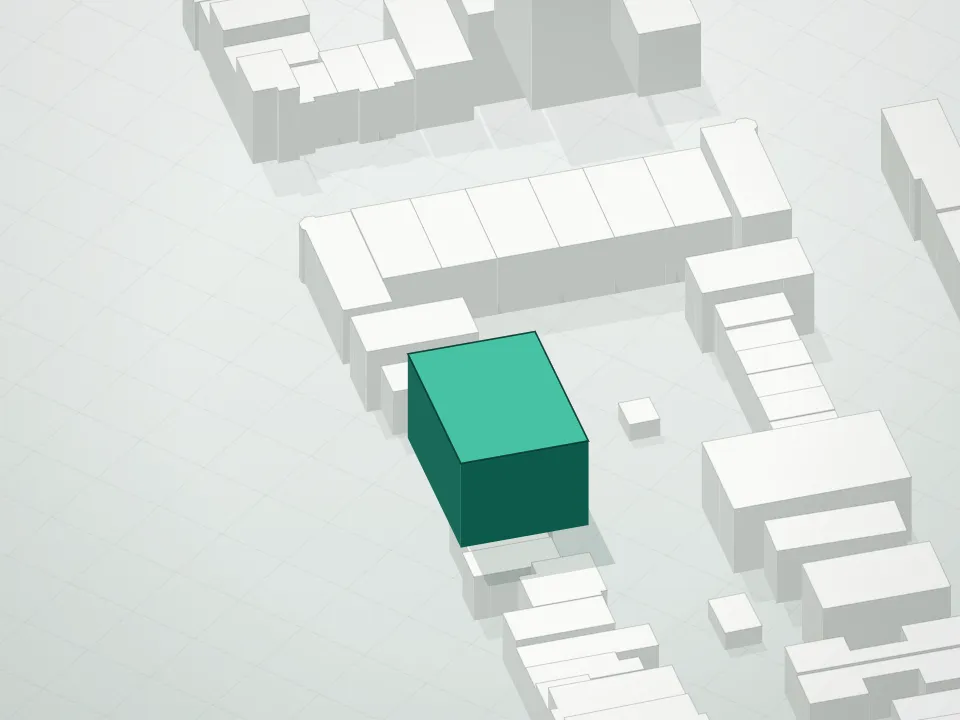
3D massing, not a photo. The building is in green. Every home closed in 28 days, between Jul 30, 2021 and Aug 27, 2021, at an average $1,268 per square foot (Schedule A asked $1,210). First-year common charges: $596 a month per home.
-
25 Quincy Street
25 Quincy Street · Clinton Hill, Brooklyn · 10 homes · boutique
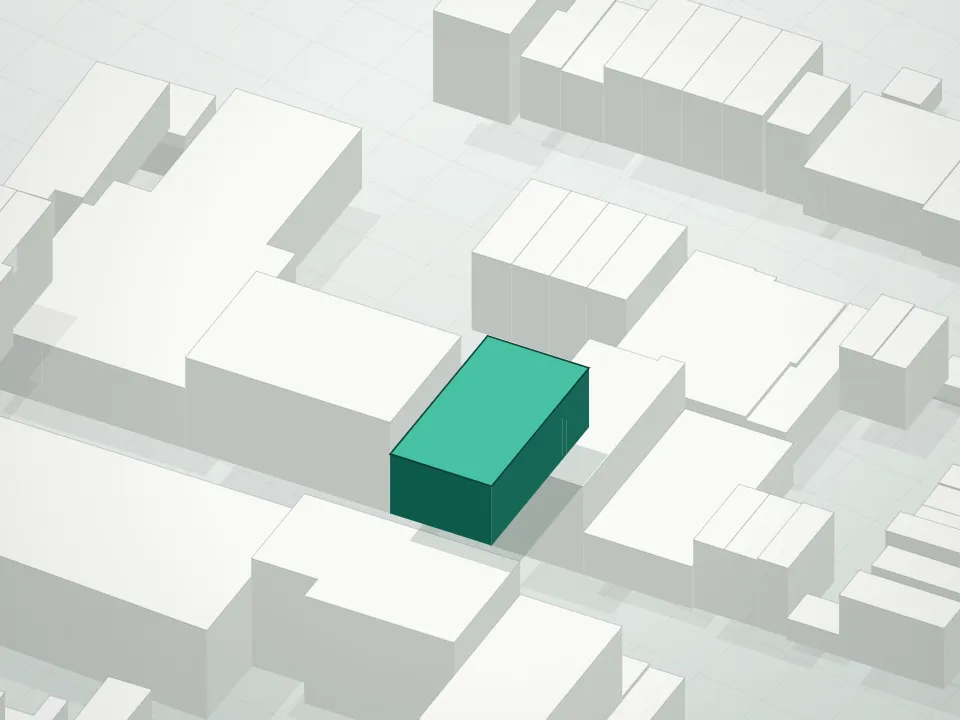
3D massing, not a photo. The building is in green. Every home closed in 38 days, between Mar 29, 2022 and May 6, 2022, at an average $1,245 per square foot (Schedule A asked $1,168). First-year common charges: $301 a month per home.
-
Kings Place
398 Kings Highway · Gravesend, Brooklyn · 51 homes · large building
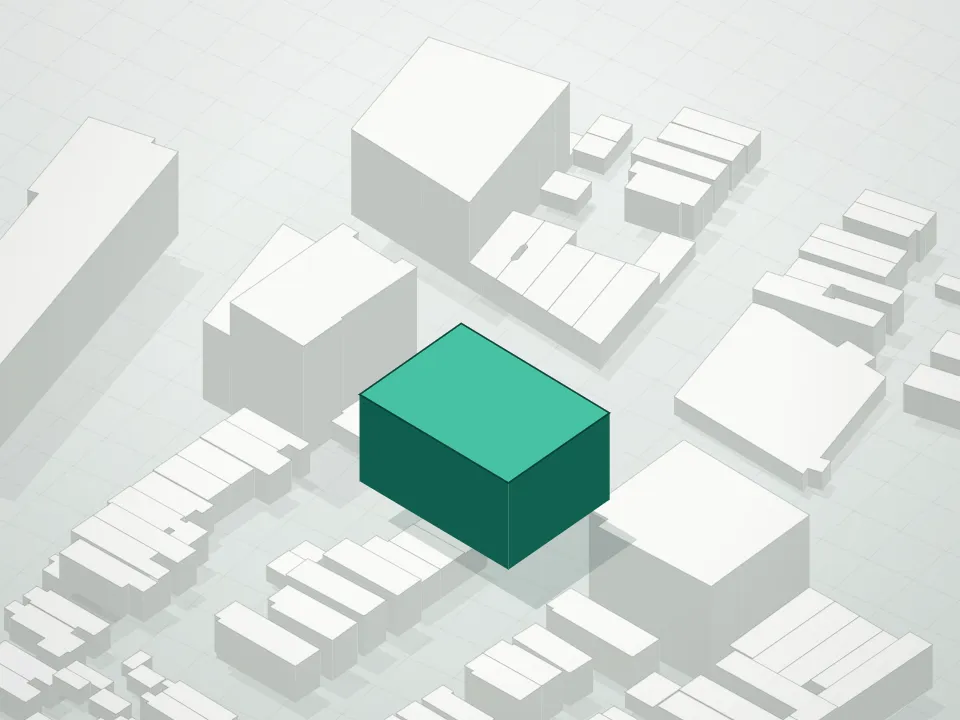
3D massing, not a photo. The building is in green. Every home closed in 15 months, between Dec 8, 2022 and Mar 8, 2024, at an average $761 per square foot (Schedule A asked $761). First-year common charges: $230 a month per home.
-
Onyx Square
2128 Ocean Avenue · Madison, Brooklyn · 56 homes · large building
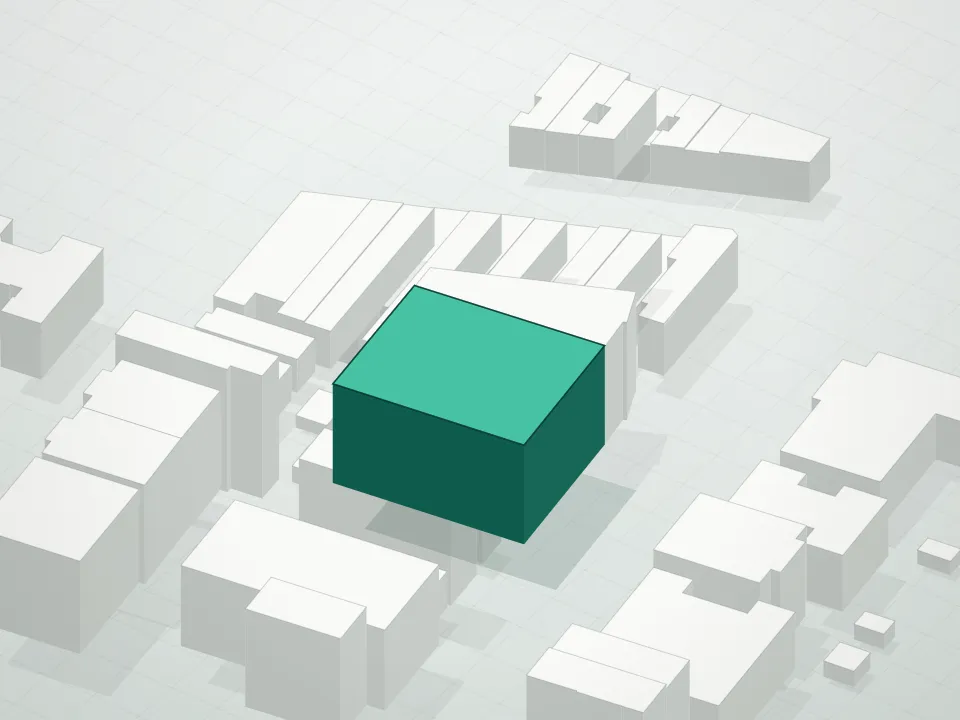
3D massing, not a photo. The building is in green. Every home closed in 17 months, between Sep 13, 2018 and Feb 10, 2020, at an average $664 per square foot (Schedule A asked $726).
The Trade-Offs in Short
- Boutique: lower monthly costs, faster sellouts, more neighborhoods to choose from. But fewer services, often no one on site, and each owner's share of a big repair is larger.
- Large: staff, more shared spaces, and costs spread over many homes. But higher common charges and taxes, and a sponsor that may stay in the building for years.
What to Ask and What to Check
- Read Schedule B, the first-year budget. Is there a staff line? A super? If not, who handles a leak at night?
- Check the reserve fund in Schedule B. In a small building, a roof or facade job is split among few owners.
- Ask about tax benefits. Does the projected tax include an abatement or exemption, and when does it end?
- Ask how many homes are sold and closed. Check closings yourself in ACRIS or on our Sales & Sellout page.
- Ask how many homes the sponsor still owns, and whether it plans to rent them out.
- Read the amendments. Price changes and budget updates show up there. See how to find offering plan amendments.
- Have your attorney review the plan, including the bylaws on rentals, pets and renovations.
Common Questions
What counts as a boutique condo building in Brooklyn?
There's no official definition. In this article, a boutique building has fewer than 20 homes. Most Brooklyn condo plans fall in that range.
Are common charges lower in small condo buildings?
Usually, yes. In the plans we read, the typical boutique building budgeted $474 a month per home against $947 in large buildings. Fewer small buildings budget for staff, which is one of the biggest costs in a condo budget.
Do large Brooklyn condo buildings cost more per square foot?
A little. The typical large building asked $1,350 per square foot in its offering plan, against $1,213 for boutique buildings. The two groups sit in different neighborhoods, so location is likely part of the gap.
Where can I see these numbers for a specific building?
Every building page on The Condo Book Project links to its offering plan and shows Schedule A prices, common charges and recorded sales where we have them.
Method: Brooklyn condo offering plans accepted by the NY Attorney General since Oct 13, 2016 with the homes found in their Schedule A. Asking price per square foot is each building's Schedule A prices over its unit sizes. Common charges are the figures on our common charges page where a plan is in its window (22 large and 714 boutique buildings have a figure), and otherwise the monthly charges Schedule A prints for every home. Taxes are the sponsor's first-year projections. Staffing means the Schedule B budget has a staff or payroll line (20 large and 661 boutique budgets). Closings are deeds of $10,000 or more recorded in ACRIS, through Aug 31, 2026; closing price per square foot covers 18 large and 480 boutique buildings. Sellout time counts only buildings with at least 10 homes where every home has closed: 8 large and 75 boutique buildings, so the large-building figure rests on few buildings. Neighborhoods are the city's 2020 Neighborhood Tabulation Areas. The pictures are 3D massing drawings, not photos. Updated as of Oct 13, 2026.
Cite This Research
The Condo Book Project, “Small Building or Tower? What Brooklyn Buyers Pay for Each,” Condo Book Research, updated Oct 10, 2026, https://www.condobooknyc.com/research/boutique-vs-tower-brooklyn-condos.html.
The figures are recomputed from the plan records each time the site is rebuilt, so cite the date you read them.